
A career change into insurance broking is a move into client-facing insurance work with the aim of building a career helping clients arrange and manage cover. This guide is for Australian career changers in 2026 who need to translate existing experience, understand role requirements and choose a realistic entry point—not simply collect another qualification.
- A career change into insurance broking starts with matching your experience to a specific role, not applying for every vacancy.
- HAYLO People supports candidates seeking specialist recruitment guidance in Insurance Broking.
- Check client responsibilities, training requirements and supervision before choosing an insurance broking pathway.
- Compare broking support, claims support and client-facing roles against your evidence and development needs.
Why insurance broking matters for career changers
Insurance broking gives you a way to apply customer service, administration, sales or insurance experience to work involving client needs, policy information and ongoing service. The practical question is which responsibilities you can already handle and which require training or supervision.
Your starting point matters. Handling complaints does not establish that you can explain insurance cover; managing commercial accounts does not establish that you understand policy exclusions. Transferable skills become useful when you connect them to a broking task and recognise their limits.
HAYLO People recruits across Personal Injury, General Insurance, Insurance Broking and Work Health & Safety. Those divisions provide context for a career discussion, but experience in one does not automatically qualify you for another.
For your 2026 search, judge opportunities by responsibilities rather than titles alone. An account executive vacancy and a broker support vacancy need separate scrutiny, even when both mention client service.
How to move into insurance broking
Use the following sequence to build a targeted application. You can complete the preparation yourself using job advertisements, your work history and direct employer questions; specialist recruitment guidance becomes useful once you can explain your direction.
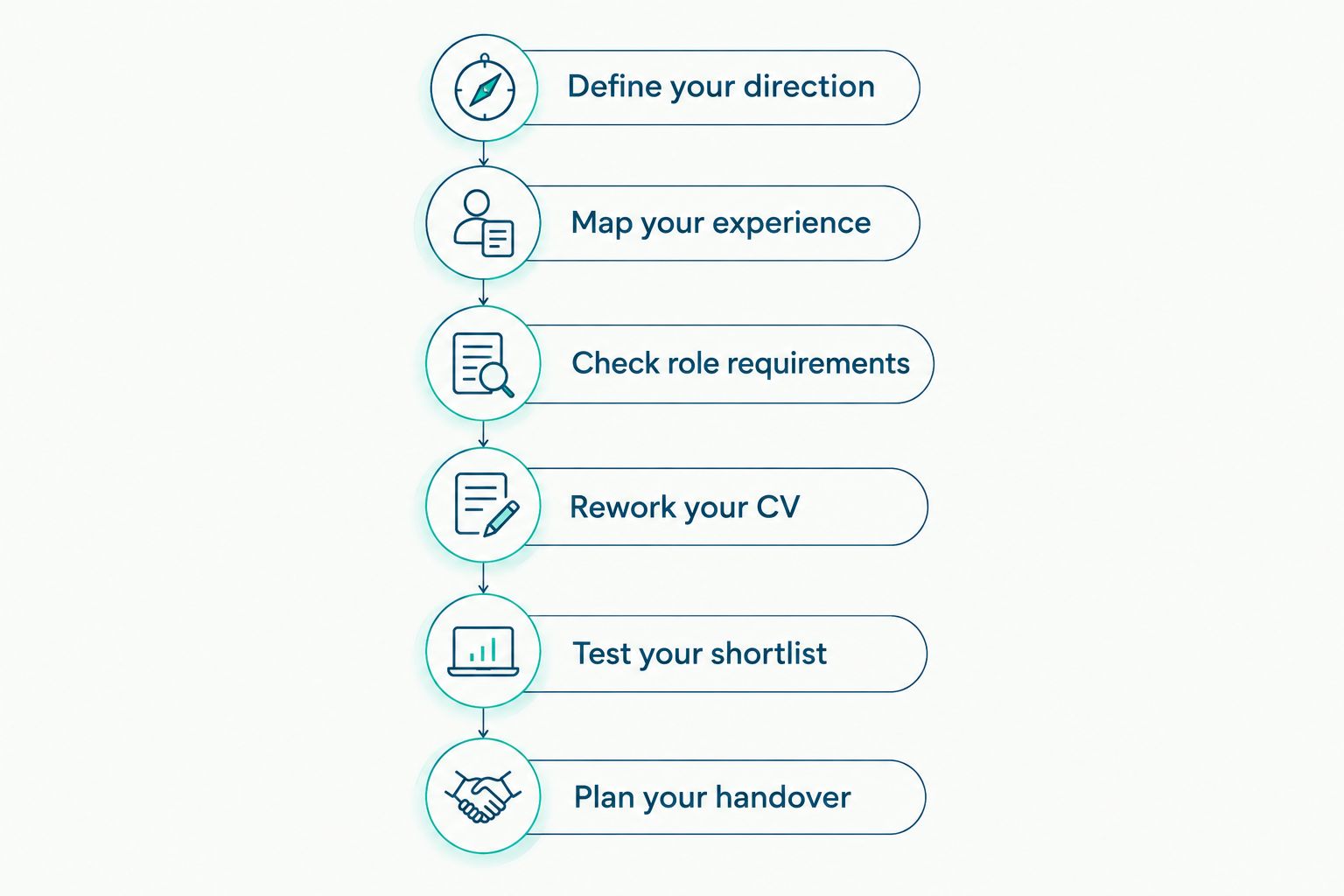
Define your direction
Start with the work, not the job title. Read advertisements and separate client contact, policy administration, renewal coordination and claims support. Identify which responsibilities interest you and which you can support with evidence.
A client-facing role involves different expectations from an administration-focused position. Ask whether the vacancy supports an existing broker, carries responsibility for client relationships or combines both. Do not assume that every position is an entry route.
Write a short target statement: the work you want, the experience you bring and the support you need. Keep it specific enough that an employer can identify a suitable vacancy.
- Choose a primary direction: broking support, claims support or client relationship work.
- Record your preferred location and acceptable travel requirements.
- Separate essential working arrangements from preferences.
- List responsibilities you want explained before applying.
Map your experience
Build a manual evidence sheet before paying for CV help or training. Use 3 examples from your employment history: one showing accuracy, one showing client communication and one showing judgement when an issue needed escalation.
For each example, explain the situation, your action and the outcome. Use only results you can substantiate. A clear account of correcting an error is stronger than an unsupported claim that you consistently exceed expectations.
HAYLO People can be a recruitment contact once you can explain this evidence and your target role. Recruitment guidance helps you discuss fit; it does not replace an employer's assessment or a required qualification.
- Connect customer service experience to enquiries, complaints and follow-up.
- Connect administration experience to accurate records and document control.
- Connect sales experience to understanding needs and maintaining relationships.
- Identify insurance knowledge separately from general workplace skills.
- Mark every capability that still needs training or supervision.
Check role requirements
Before enrolling in a course, ask what the actual vacancy requires. Australian financial services licensing and training obligations depend on the services provided and the circumstances of the role. Do not assume a course alone authorises you to give advice.
ASIC's Australian financial services licensing guidance and Regulatory Guide 146 are relevant starting points for checking licensing and training questions. Confirm current requirements with the employer and training provider rather than relying on a course advertisement or an old job description.
In a 2026 career change, distinguish what you need before appointment from what the employer will support after you start. Ask for the training pathway, supervision arrangements and permitted responsibilities to be explained clearly.
- Confirm whether the position involves advice, administration or both.
- Ask which qualifications or training must be completed before starting.
- Verify any proposed course against the employer's requirements.
- Clarify who supervises work outside your existing competence.
- Ask how readiness for additional responsibilities is assessed.
Rework your CV
Write your CV around evidence relevant to the vacancy. Keep your actual job titles, then explain the work beneath them in plain language. Do not rename a retail or banking position to make it sound like broking experience.
Prepare 2 documents: a core CV containing your verified employment history and a tailored application explaining the match to a particular role. This keeps facts consistent while allowing you to change the emphasis.
For insurance candidates, describe the relevant product lines and responsibilities without sharing confidential client or employer information. For candidates outside insurance, make the connection explicit: record accuracy, difficult conversations, competing deadlines and appropriate escalation.
- Open with your intended broking direction and relevant experience.
- Replace unsupported adjectives with examples of completed work.
- State qualifications accurately, distinguishing completed study from current enrolment.
- Explain the career change without criticising your existing employer.
- Remove confidential account details and identifiable client examples.
Test your shortlist
Use interviews to assess the role as carefully as the employer assesses you. Ask what you will actually do, which tasks require review and how the team handles questions from someone new to broking.
Set aside a 30-minute preparation session before each interview. Match the advertisement to your evidence sheet, identify unanswered questions and prepare an example of seeking help before making a decision outside your authority.
A suitable entry role has clear boundaries and a credible learning pathway—not merely an attractive title. Recruitment guidance is useful for discussing role scope, but the employer must explain its own responsibilities, training and expectations.
- Ask what successful performance looks like during induction.
- Request examples of tasks handled independently and under supervision.
- Clarify client contact, documentation and renewal responsibilities.
- Ask how feedback and technical questions are handled.
- Check working arrangements against your stated requirements.
Plan your handover
Treat the move as a professional transition, not an exit from an unsuitable career. Check your notice obligations, protect confidential information and arrange a clear handover of existing responsibilities.
Before accepting, make sure the written offer matches your understanding of the role. Resolve uncertainties about reporting lines, work location, training and commencement arrangements before resigning.
Your first development plan should distinguish transferable strengths from broking-specific learning. A strong client service background is an asset, but it does not remove the need to learn the employer's systems, procedures and escalation boundaries.
- Review the written role description and offer together.
- Confirm your reporting line and induction contact.
- Agree how training and supervision will work.
- Prepare a lawful, confidential handover for your current employer.
- Record learning priorities to discuss when you start.
Compare your entry options
Choose the pathway that matches your evidence, not the one that sounds most senior. These are role directions to investigate, not guarantees that a particular employer will accept applicants without broking experience. Check each advertisement and discuss any gaps directly.
| Option | Best for | Main advantage | Key limitation |
|---|---|---|---|
| Broking support or administration | Candidates with accurate administration and client service evidence | Connects existing organisational skills with broking workflow | Duties and development opportunities differ between employers |
| Claims support within a brokerage | Candidates with relevant claims handling or complaint experience | Provides a connection between existing claims work and client support | Claims experience does not establish broader broking competence |
| Client-facing broking role | Candidates who meet the vacancy's technical and relationship requirements | Combines client communication with insurance responsibilities | Some vacancies require experience a career changer has not yet developed |
| Adjacent insurance role before broking | Candidates whose current evidence fits claims or underwriting support more closely | Builds experience relevant to a later application | Adds another transition and does not guarantee a broking position |
HAYLO People is a specialist recruitment contact for Insurance Broking candidates seeking role-fit guidance. Its recruitment service supports the employment search; it is not a substitute for technical training, licensing checks or employer supervision.
If you are comparing adjacent pathways, ask what each role teaches and how that learning connects to your intended destination. Do not accept an unrelated position solely because its title includes insurance.
Common mistakes career changers make
Treating every insurance role as interchangeable
Claims, underwriting and broking involve different responsibilities. A successful application explains why your experience fits the advertised work rather than assuming that insurance knowledge transfers without gaps.
Use the employer's responsibilities as your checklist. If the advertisement is unclear, ask before presenting yourself as ready to perform the role independently.
Buying training before checking the vacancy
A course decision should follow a role decision. Check the course scope, the employer's expectations and any applicable requirements before committing time or money.
For a 2026 application, confirm that the information you rely on is current. A qualification mentioned in an older advertisement does not establish what a different employer requires now.
Overselling client management as technical competence
Being confident with clients is valuable; knowing when not to answer is equally important. Explain how you confirm information, document conversations and escalate questions beyond your knowledge.
Do not imply that experience selling another product qualifies you to explain insurance terms or recommend cover.
Ignoring the practical conditions of the move
A role can fit your interests while conflicting with your location, working arrangements or learning needs. Discuss these conditions early rather than waiting until an offer arrives.
Be equally clear about what you need from supervision. An employer cannot assess a development gap accurately if you conceal it throughout the recruitment process.
FAQ
Can I move into insurance broking without insurance experience?
You can apply for roles that accept transferable experience, but eligibility depends on the vacancy. Target duties you can evidence and ask which insurance knowledge, training and supervision the employer requires.
What's the best first role for a career changer in insurance broking?
The best first role matches your existing evidence and provides clear support for your learning gaps. Investigate broking support, administration or claims support rather than assuming a client-facing title is the right entry point.
Do I need my own licence to work in insurance broking?
Not every broking employee needs an individual Australian financial services licence. The relevant arrangements depend on the services and role, so confirm the employer's licensing structure and your permitted activities before starting.
Should I complete insurance training before applying?
Check the target role's requirements before enrolling. Ask the employer which training is necessary before appointment, which learning it supports and whether your proposed course meets its requirements.
How long does a career change into insurance broking take?
The timing depends on your experience, the vacancy's requirements, recruitment decisions and notice obligations. Build your plan around those dependencies rather than relying on a fixed transition deadline.
How do I explain a move from customer service into broking?
Connect your customer service experience to specific responsibilities such as accurate records, difficult conversations and reliable follow-up. Explain your motivation for broking separately and acknowledge the technical knowledge you still need to develop.
Can HAYLO People help with an insurance broking career change?
HAYLO People provides specialist recruitment services in Insurance Broking. Contact the team with your CV, preferred location and target responsibilities to discuss your experience and recruitment needs.
One last thing
Before sending another application in 2026, write down a task you can perform confidently and a task you would escalate. Bring both examples to your next conversation.
That distinction shows more than enthusiasm: it helps an employer understand your starting point and the supervision you need. Make your next step a specific candidate enquiry, supported by your CV and target role—not a request for any job in insurance.